Behind Huckabee’s remarks: The U.S. role in advancing the ‘Greater Israel’ vision
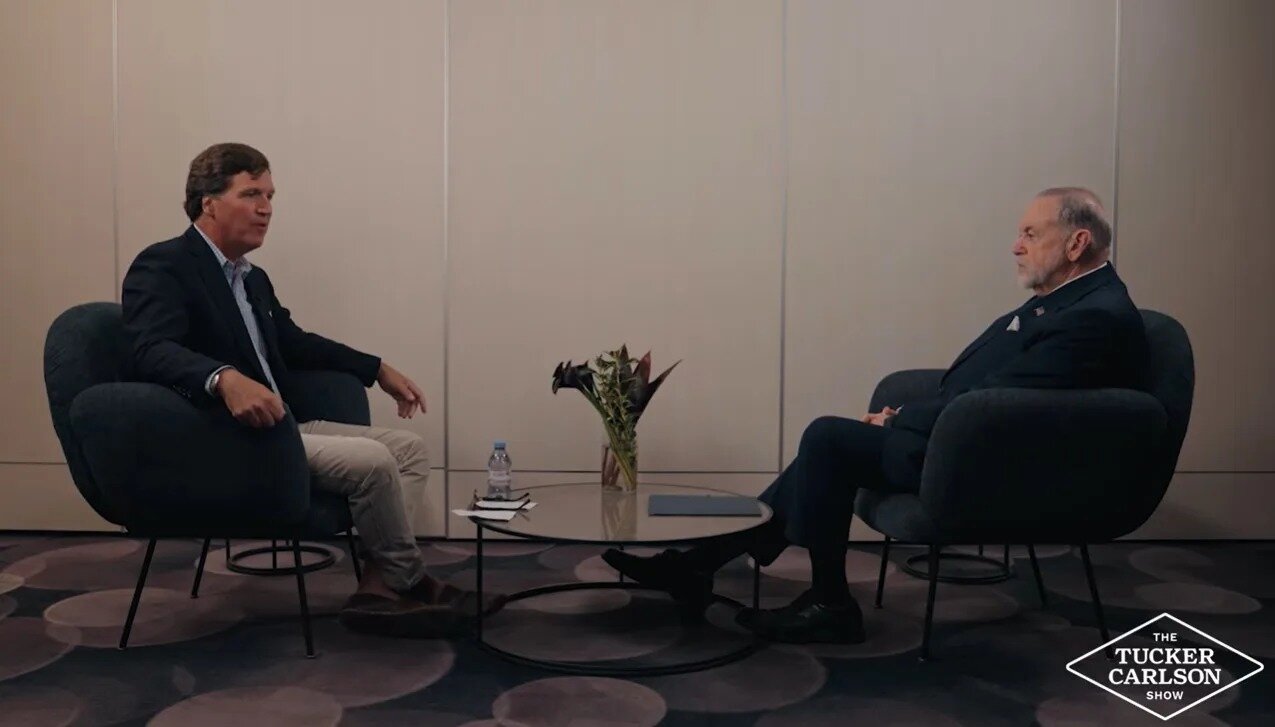
TEHRAN – When US Ambassador to Israel Mike Huckabee told conservative commentator Tucker Carlson that it would be “fine” if Israel took all the Middle East land—from the Nile in Egypt to the Euphrates in Iraq—he revealed more than personal opinion.
His remarks exposed a troubling alignment between the US and Israel’s expansionist ambitions, suggesting that Washington’s diplomacy is not only indifferent to, but ideologically supportive of, territorial conquest justified by religious narratives.
Huckabee framed potential Israeli expansion as divinely sanctioned, even leaving open the possibility that war could legitimize the seizure of neighboring territories. Far from a passing comment, his statement highlights the degree to which US officials are willing to prioritize ideological affinity with Israel over international law, regional stability, and Palestinian rights.
These ambitions are mirrored and amplified by senior Israeli officials. Prime Minister Benjamin Netanyahu has repeatedly affirmed Israel’s historical and religious claims to land beyond the regime’s borders, describing settlements in the West Bank as part of a “historic and spiritual mission.” In a televised interview in 2025, Netanyahu said he feels “very attached” to the idea of a Greater Israel, framing his leadership as connected to a divine and historical mandate. Arab states condemned these remarks as “a dangerous and provocative escalation” and “a threat to the sovereignty of states,” warning that such rhetoric undermines regional stability.
Finance Minister Bezalel Smotrich has taken an even more explicit approach. In 2023, he presented maps that incorporated Palestinian territories, Lebanon, Syria, and Jordan into Israel, asserting that the Palestinian people are a “historical invention.” In 2025, he announced plans to expand settlements in the West Bank, explicitly aimed at “burying the idea of a Palestinian state.” These statements, combined with Israel’s ongoing occupation of the West Bank, annexation of the Golan Heights, and post-2024 military outposts in southern Lebanon, reflect the operationalization of the Greater Israel vision into real policy.
Huckabee’s statements also illuminate the role of the United States in enabling these ambitions. A Christian Zionist and staunch defender of Israel, he criticized the International Criminal Court and the International Court of Justice as “rogue organizations” for opposing Israel’s occupation. This aligns with a broader US policy pattern in which Washington provides political and diplomatic cover for Israel’s territorial expansion, effectively shielding expansionist leaders from international consequences. The 2024 ICJ ruling declaring Israel’s occupation of Palestinian territories illegal remains largely unenforced, while the US continues to signal tolerance for maximalist claims.
The convergence of ideology, policy, and diplomacy is destabilizing. With leaders like Netanyahu and Smotrich openly advocating expansion, and US officials like Huckabee normalizing such ambitions, the risk is clear: regional borders may increasingly be defined not by law, diplomacy, or mutual consent, but by religious justification, military might, and US complicity. The Greater Israel vision is no longer a fringe idea—it is becoming embedded in official discourse and practice, threatening Palestinian statehood, undermining international law, and exacerbating the instability of the Middle East.
Leave a Comment